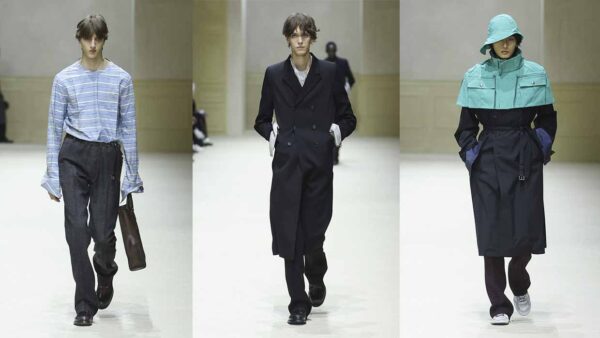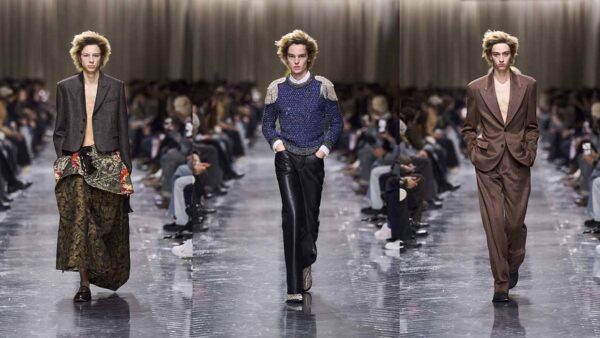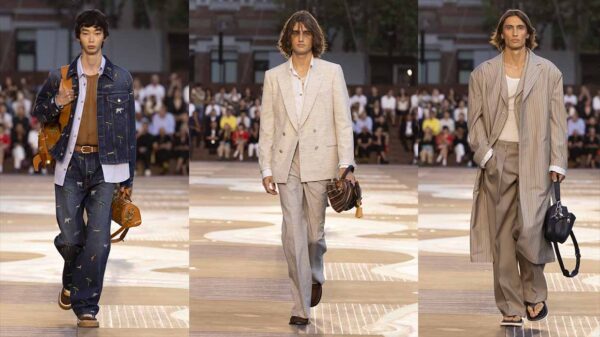

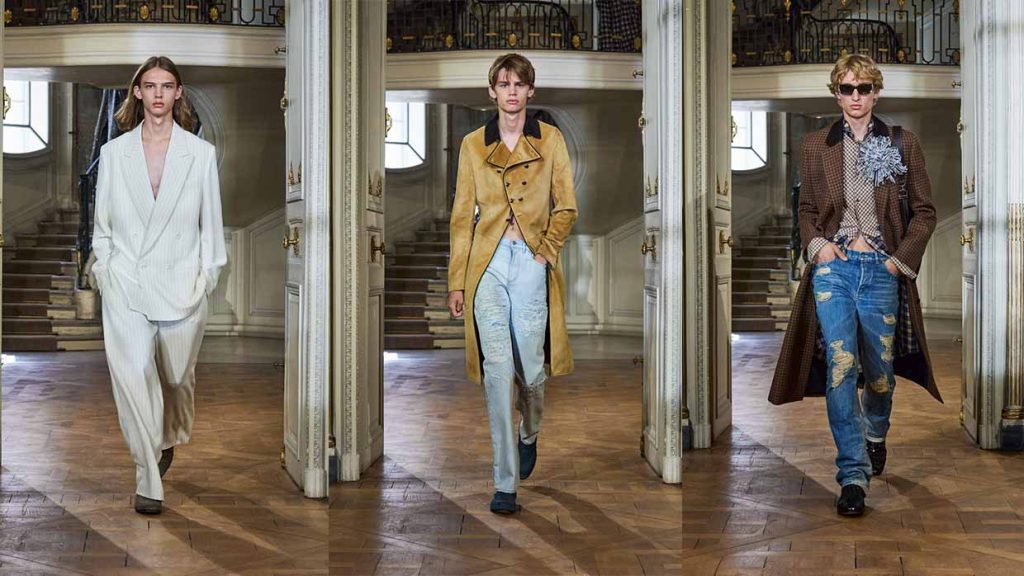
For Dior Men Spring/Summer 2027, Jonathan Anderson presented his most complete expression of the world he has been building at the house: one where aristocratic refinement and the energy of youth culture meet somewhere between the end of a party and the start of a new day.
The collection unfolded as a study in contrasts. Decorative arts inspired by the eighteenth century and historical tailoring, both closely tied to Christian Dior’s own fascinations and the setting of the Musée Nissim de Camondo, collided with references to rave culture, late-night dressing and the spontaneous way young people mix formal and casual clothes.
Anderson’s imagined character felt like a collision between Eton tradition and after-hours excess. The result was a wardrobe for the “disheveled aristocrat”, a figure that has become central to his Dior narrative.
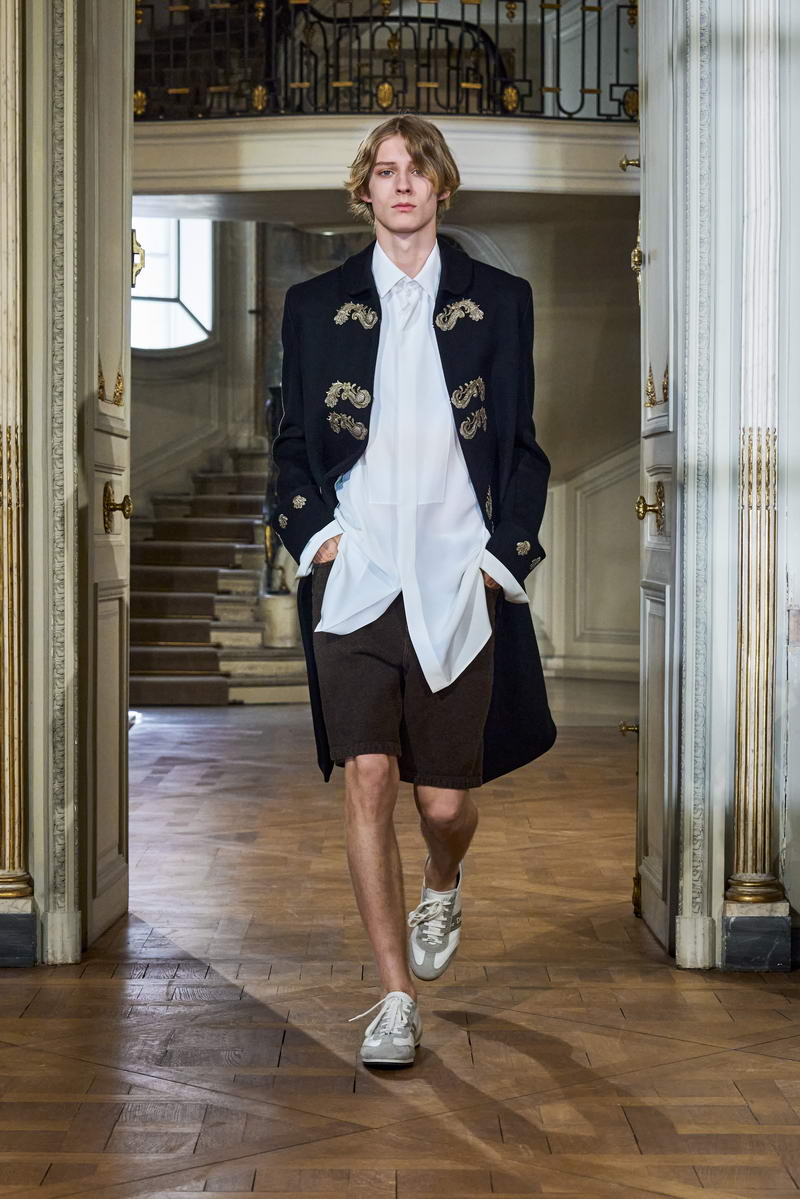
Tailoring that comes undone
The designer continued the idea introduced in his debut collection, though this season it appeared looser, easier and more wearable. Tailoring became softer and more relaxed through baggy “Bobby” suits inspired by a vintage Marc Bohan design, roomy double-breasted jackets, loose tuxedos and wider trousers.
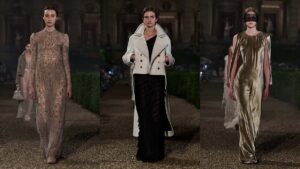
Transparency also played a role. Silk chiffon pieces printed with pinstripes and houndstooth patterns brought an unexpected sense of lightness to traditional tailoring. Frock coats, dressing gowns and pajama suits merged with trenches and bombers, creating garments that sat between history and modern dressing.
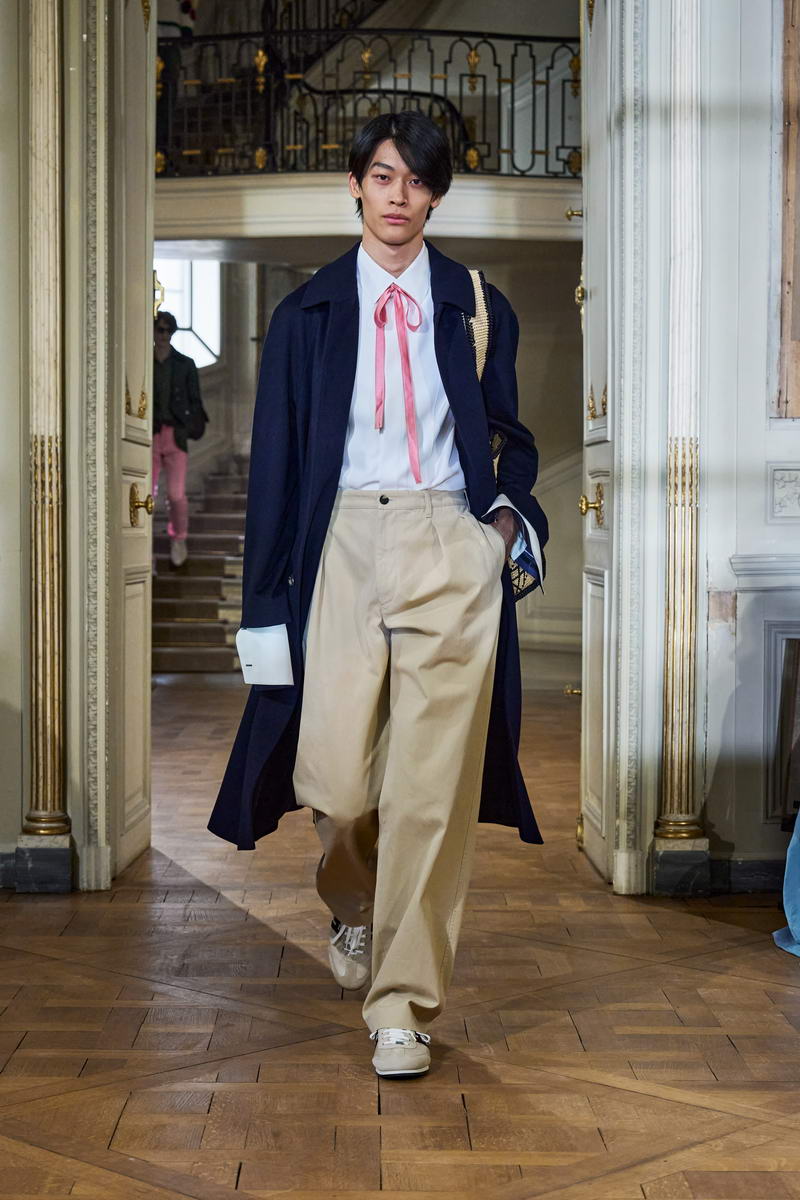
There was a deliberate sense of imperfection throughout. Crooked bow ties, trailing dressing gowns, frayed hems, ripped edges and laddered knits gave the clothes the feeling of having lived through a long night. Yet the elegance of Dior remained intact.
The glamour of the morning after
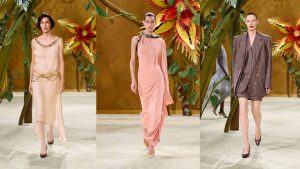
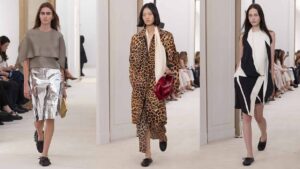
The colour palette balanced classic neutrals with flashes of celebration. Navy, beige, black, chocolate brown and soft wool shades formed the foundation, while silver and gold sequins, metallic surfaces, stone-washed pinks and embroidered bright tones brought moments of glamour.
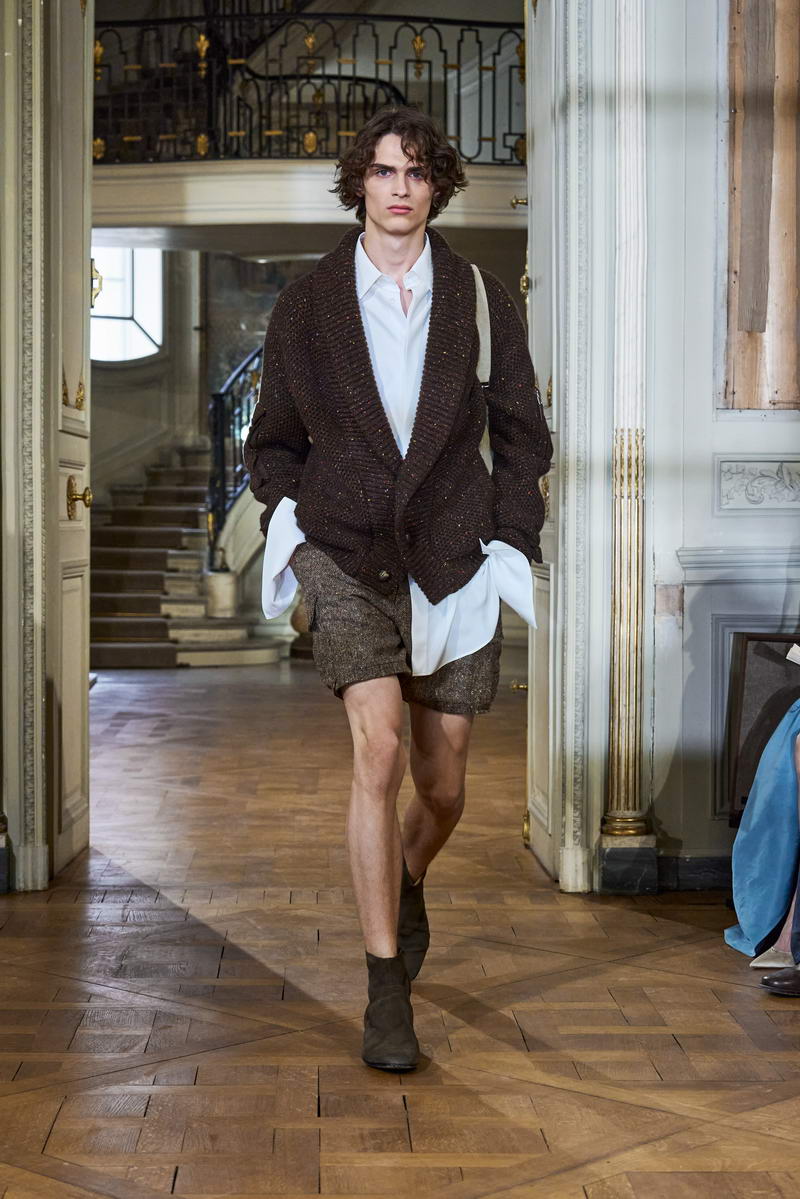
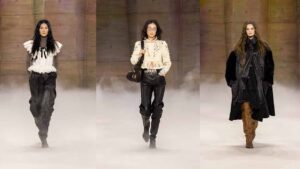
The collection also played with texture in a particularly rich way. Distressed denim appeared alongside lavish embroidery, while sheer printed chiffons met heavy knits and outerwear. Suede parkas and shearling-lined blazers suggested comfort and warmth, almost like wrapping oneself in a blanket after dawn.
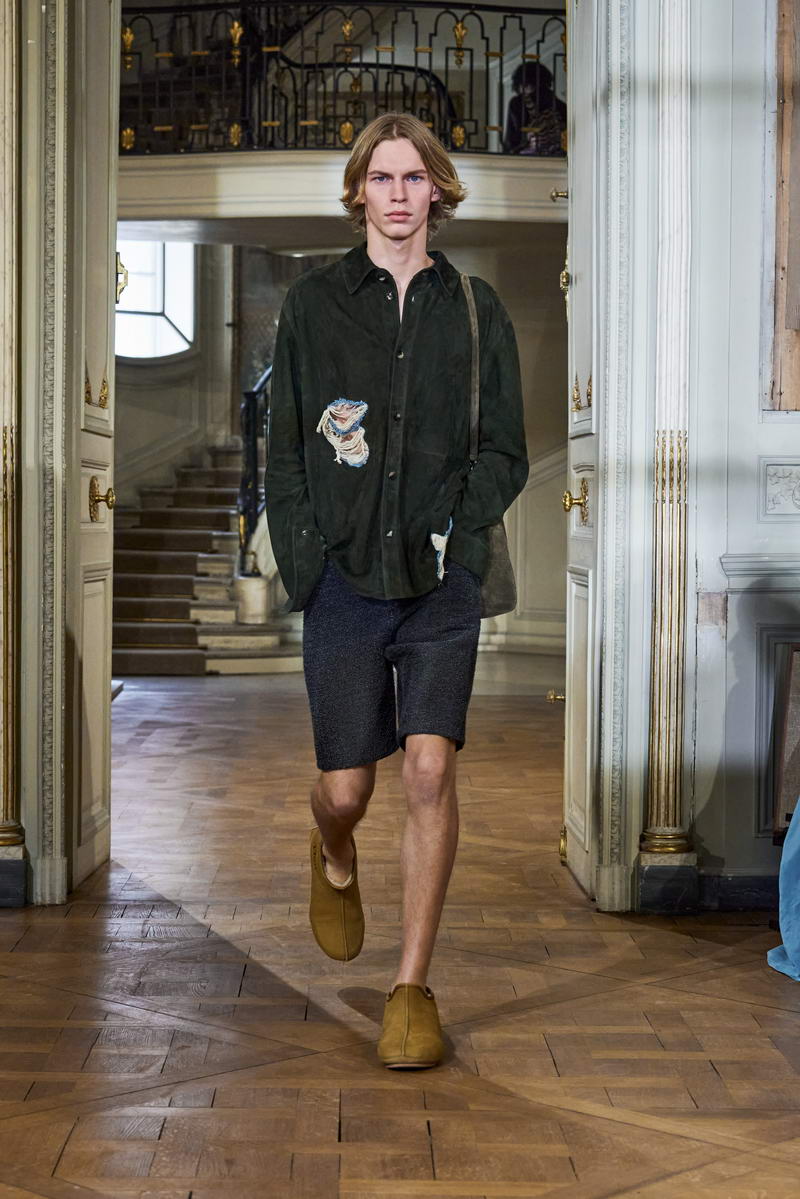
Sequined polka dots, crinkled checks, fringed jackets, metallic fabrics and touches of shimmering python reinforced the collection’s dialogue between luxury and spontaneity.
Heritage meets rave culture
One of the collection’s strongest ideas was the meeting of Dior’s heritage with the language of nightlife. Sequined jeans and trousers, disco-ball boots and metallic party pieces suggested a wardrobe for a perpetual celebration, what could be called a party-boy uniform.
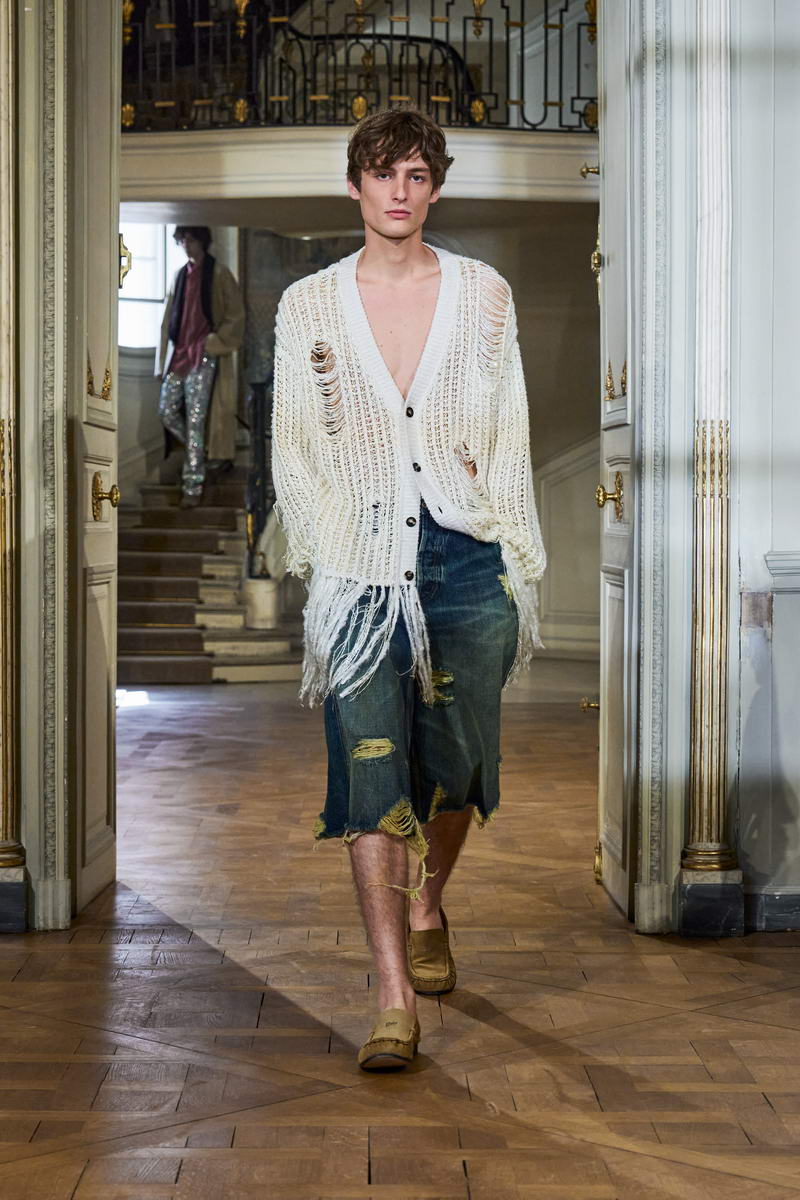
Historical garments were given a contemporary attitude through pajama details and distressed finishes, while tailoring appeared both polished and undone. The collection also seemed designed with a broader audience in mind, offering strong outerwear, knitwear and versatile separates that could move easily between seasons and different ways of dressing.
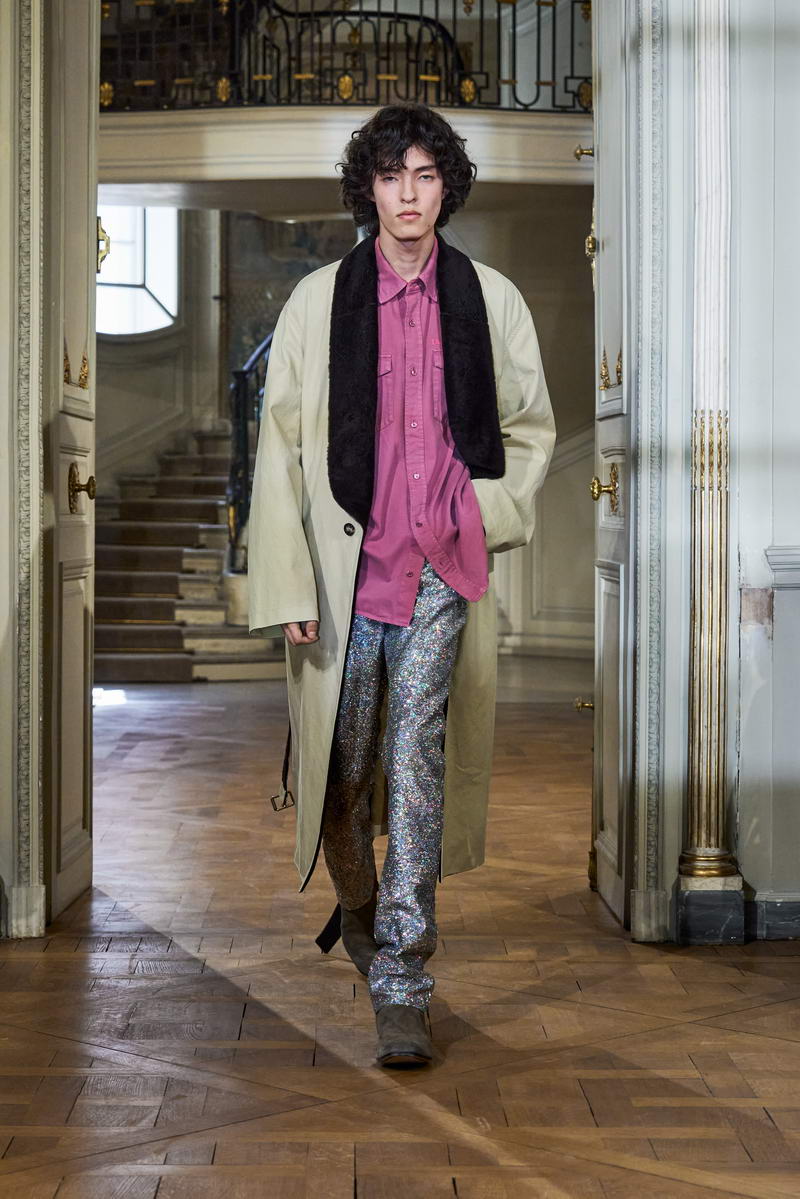
At the same time, the collection opened a wider conversation within Dior, sharing techniques and ideas with the women’s collections while continuing to build new house codes rooted in both formality and partying.