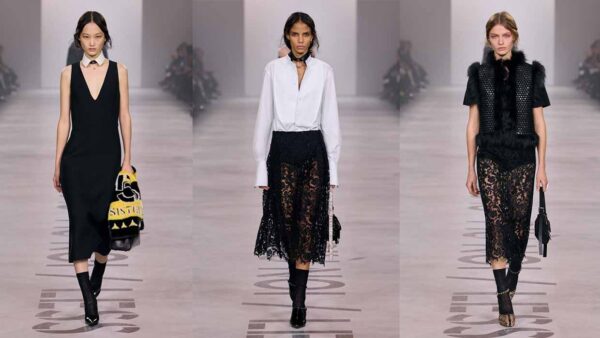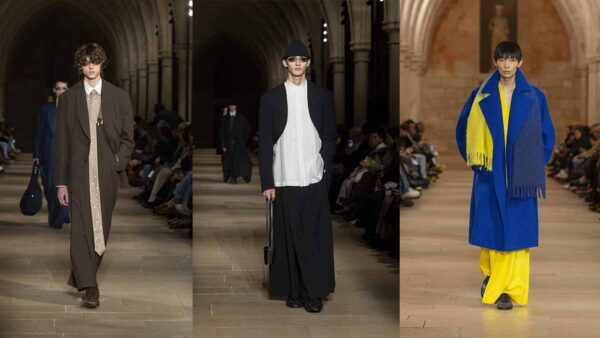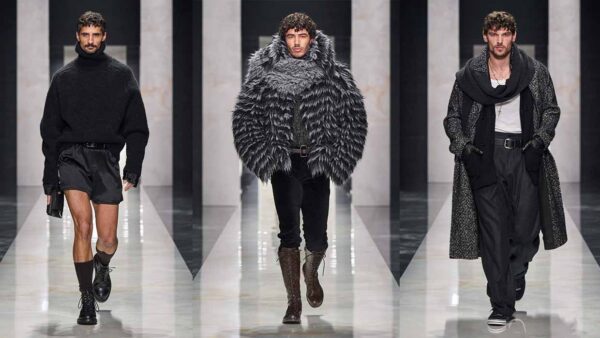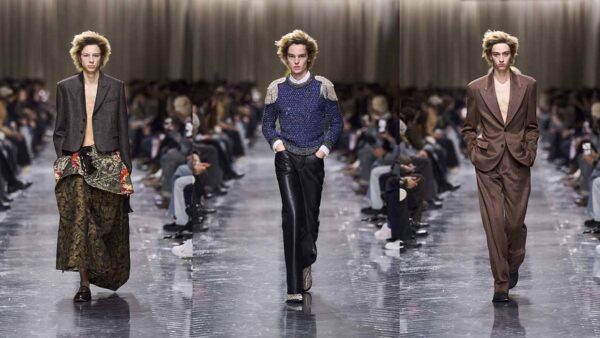
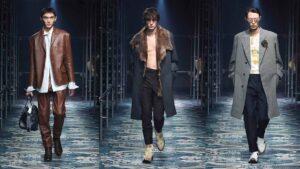
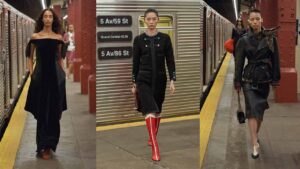
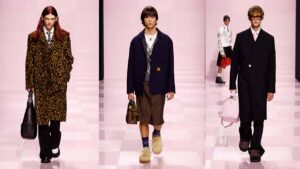
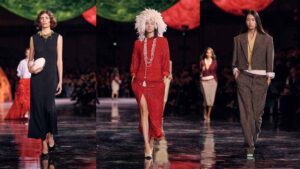

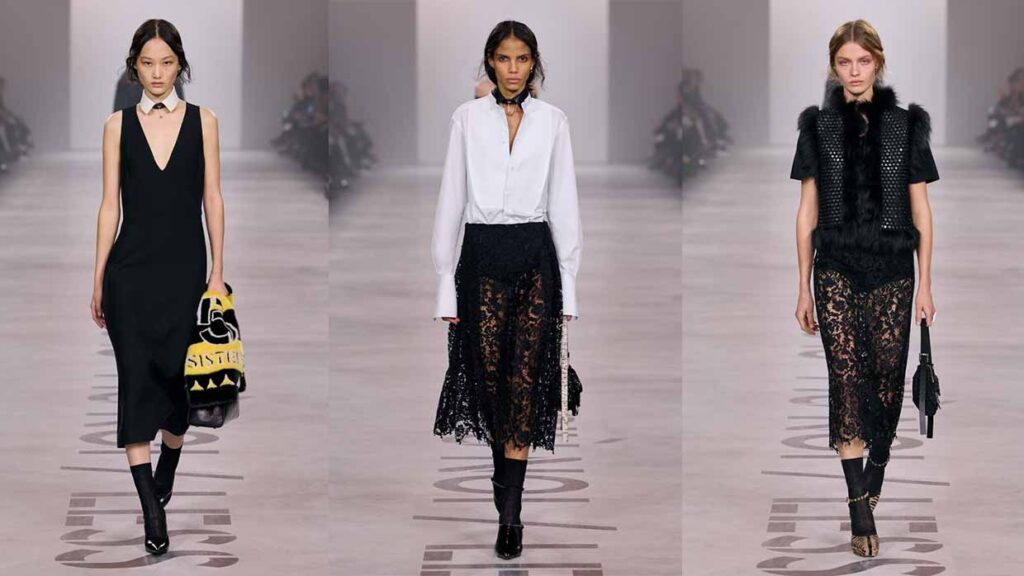
The Fall/Winter 2026–2027 show marked the debut of Maria Grazia Chiuri as creative director – an emotional return to the house where she began her career in 1989.
Her opening declaration, “Less I, more us,” set the tone for a collection grounded not in singular authorship but in collective identity. It is a phrase that echoes the legacy of the five Fendi sisters and the Roman family spirit that built the maison. At a moment when fashion often magnifies individual ego, Chiuri turns instead to shared authorship, shared wardrobes, shared lives.
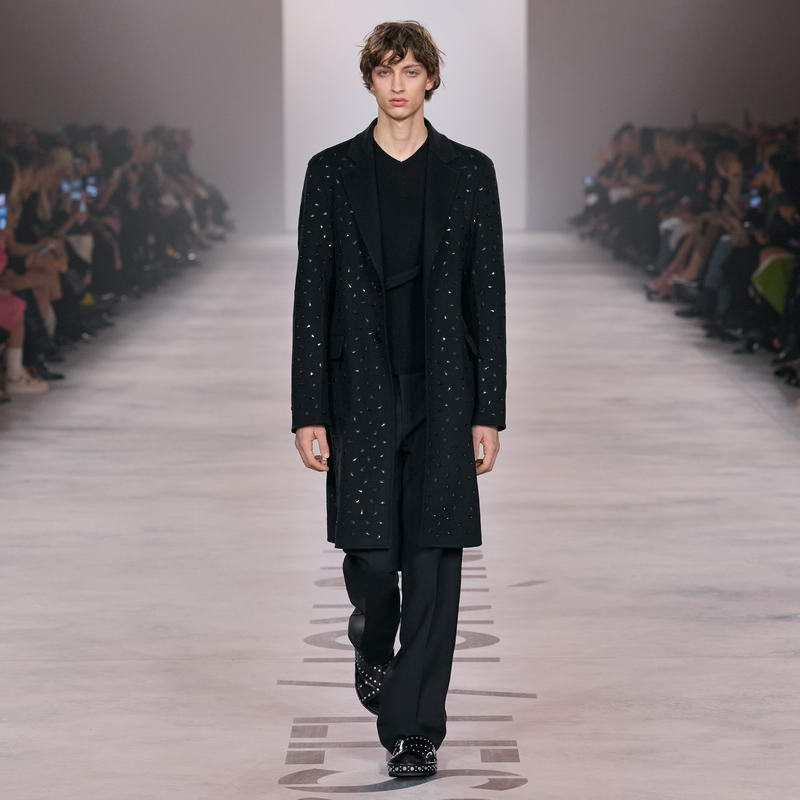
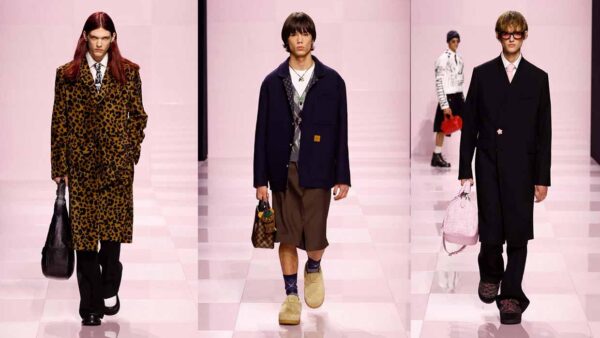
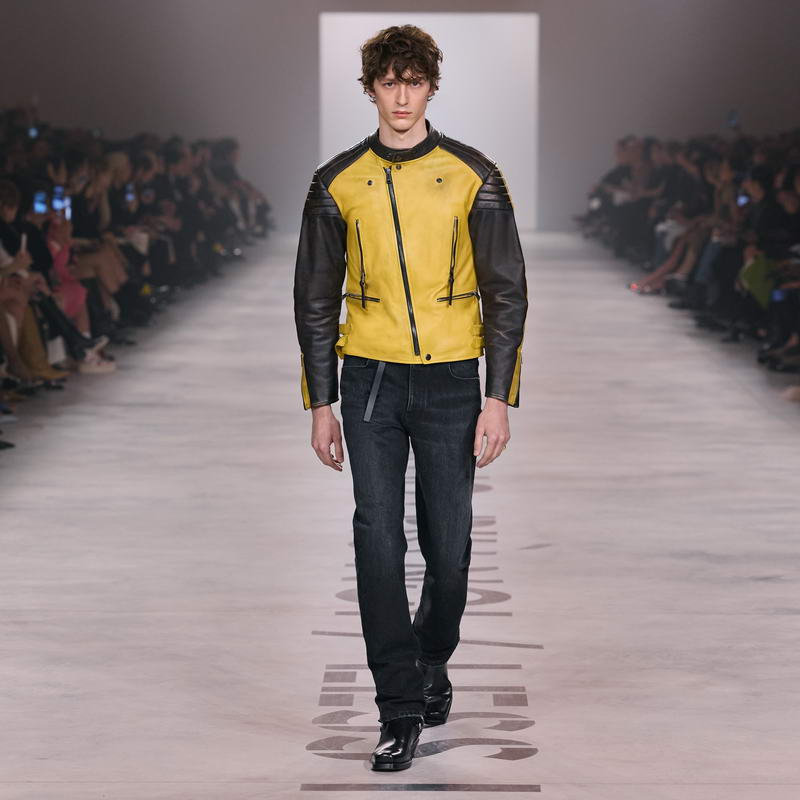
Presented as a co-ed show of 80 looks, the collection dissolved the binary between menswear and womenswear. Masculine and feminine ceased to be opposing categories and became instead descriptive qualities – fluid, interchangeable, human. Men and women walked side by side in a transversal wardrobe built for emotional durability and daily existence.
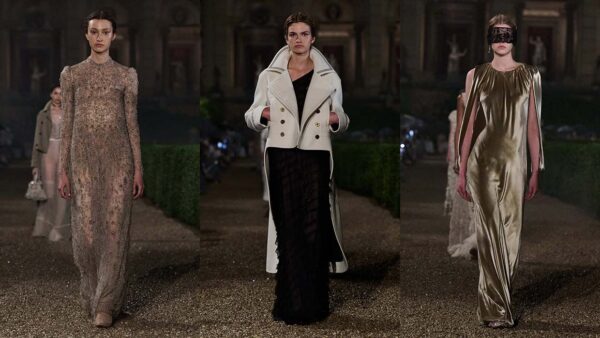
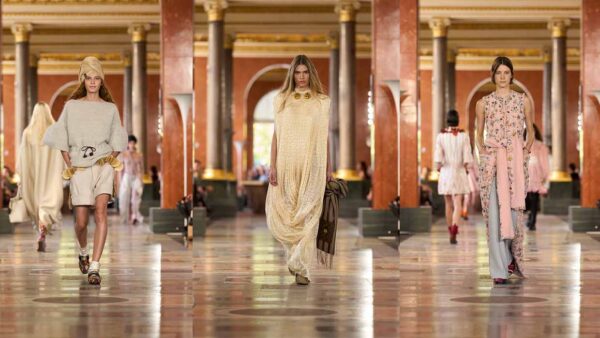
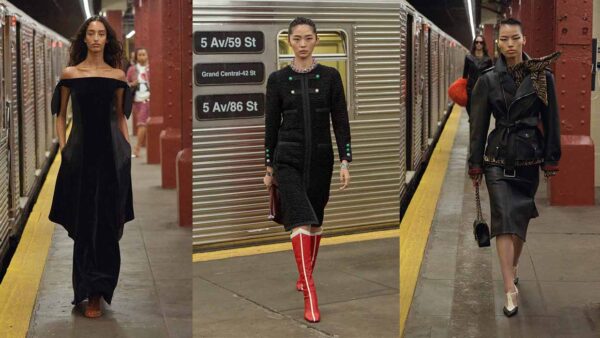
Black formed the backbone of the palette, accompanied by navy, beige, khaki, and white. These professional neutrals were punctuated with army green flight suits, cherry-red slips, champagne sequins, cool blues, and flashes of animal prints. There were bumblebee-yellow socks peeking out from sheer hosiery, blotted florals on shearling coats, and restrained tiger and cheetah motifs that added a Roman sense of audacity without veering into excess.
The silhouettes were streamlined yet adaptable: knee-length shirtdresses, precise tailoring, sleeveless tunics draped softly at the back, sheath dresses layered over trousers, tea-length pleated skirts, and fluid evening columns in panne velvet with a whisper of 1920s glamour. Minimal bulk ensured ease – garments made to move, to layer, to live in.
If Chiuri’s motto addresses the collective, the clothes themselves honor the individual body. At a time when the virtual threatens to eclipse the tactile, this collection is a call back to desire – to texture, to weight, to touch.
Slinky silks skimmed the figure; lace insets and sheer layers revealed without constraining. Laser-cut leather collars – worn as chokers – framed the neck with graphic precision, while wool coats and tailored blazers grounded the sensuality in everyday pragmatism.
Eveningwear felt instinctive rather than theatrical: embroidered slips, fluid satin gowns, delicate lace cocktail dresses, and velvet columns that seemed to breathe with the wearer. Nothing imposed; everything accompanied.
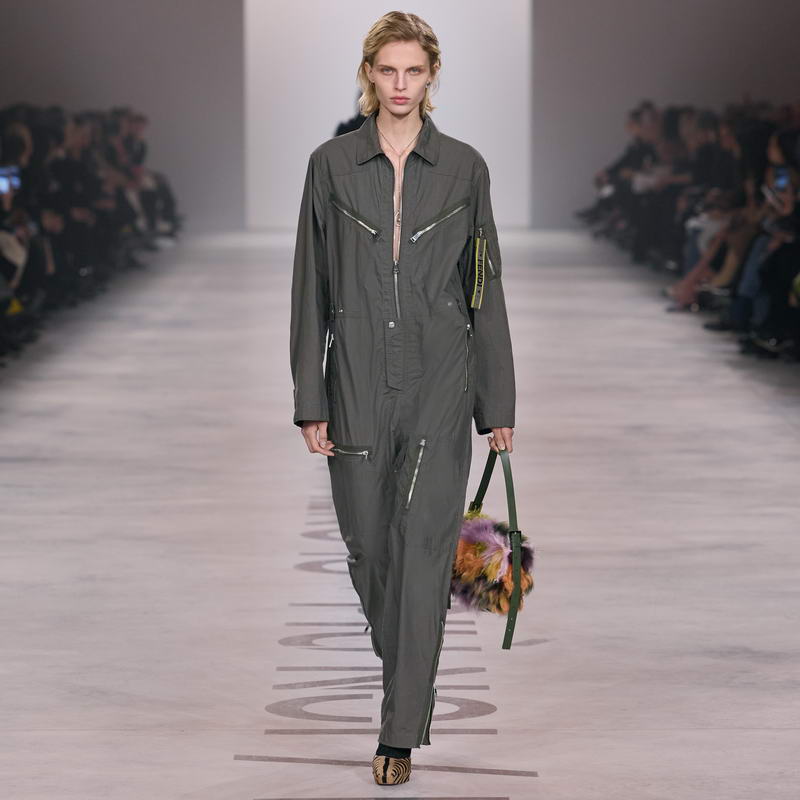
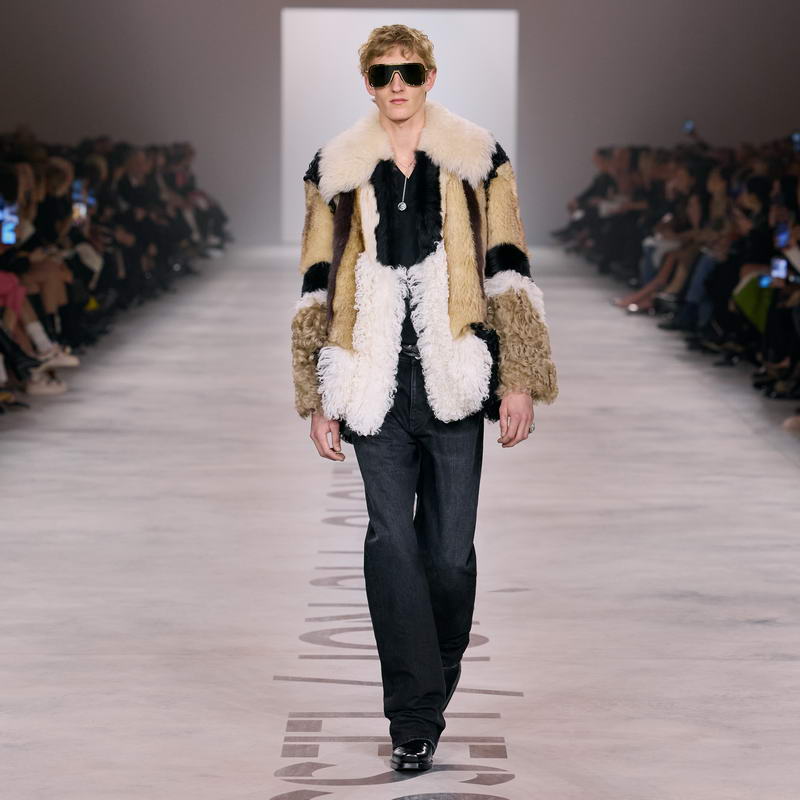
No conversation about Fendi is complete without fur. Here, Chiuri approached the house’s heritage with modern responsibility. Archive furs were remodeled into patchwork coats, shaggy stoles, intarsia scarves, and tippets, rendered lighter and more fluid. The result was fur-forward outerwear that respected craftsmanship while acknowledging sustainability – Roman precision translated into contemporary conscience.
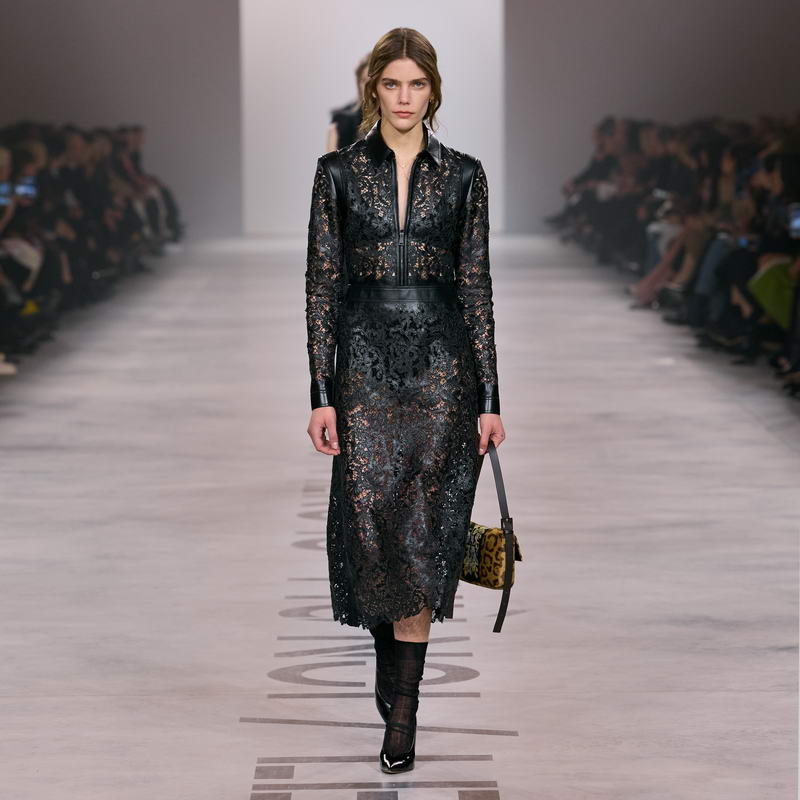
The collection functioned as a map of personal geography – clothes as encounters, as cultural sediment. Jewelry pieces from the estate of artist Mirella Bentivoglio underscored a dialogue between generations, while graphic elements – including a rebalanced double-F logo redesigned into squared symmetry – suggested renewal without rupture.
Accessories reinforced Chiuri’s homecoming narrative. The iconic Fendi Baguette – which she helped develop in the 1990s – returned in canvas, leather, fringe, and animal motifs. The Fendi Peekaboo appeared in moody cheetah print. Pointed leather slingbacks, lucite wedge heels, and snake-embossed footwear completed the look.
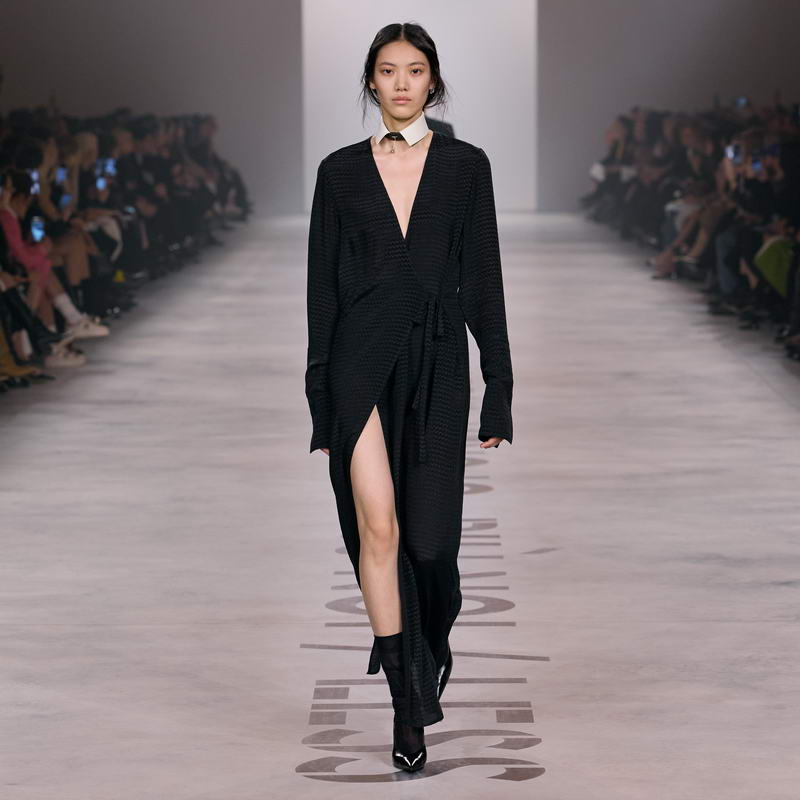
There is an approachable classicism to this debut – crowd-pleasing to some, perhaps restrained to others. Yet its power lies not in spectacle but in coherence. Chiuri proposes fashion not as a platform for singularity but as a shared language.
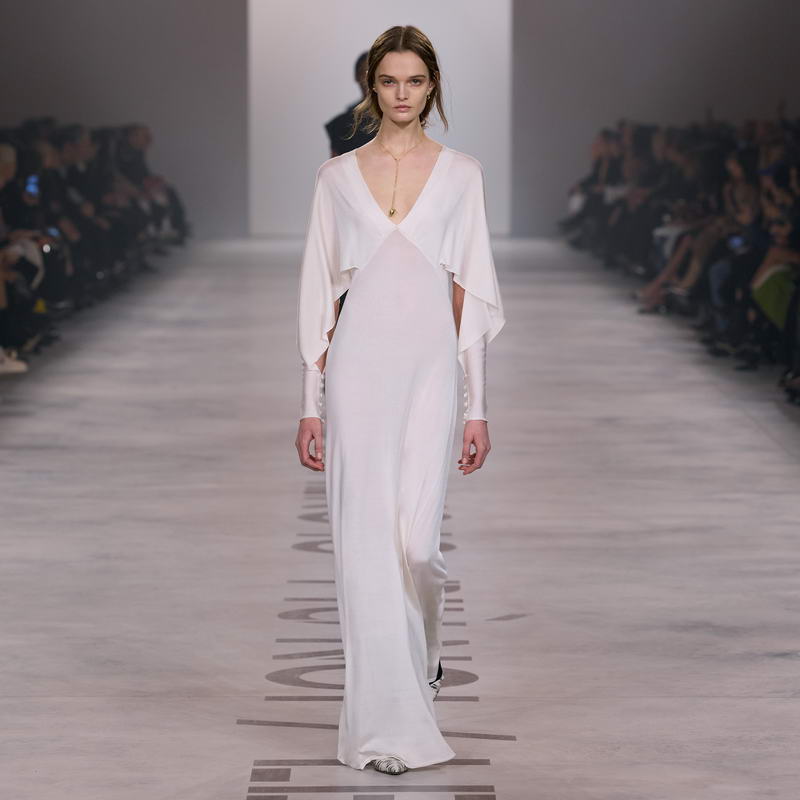
Less I, more us. A Roman idea, a feminine idea. A wardrobe not meant to dominate life – but to walk alongside it.