




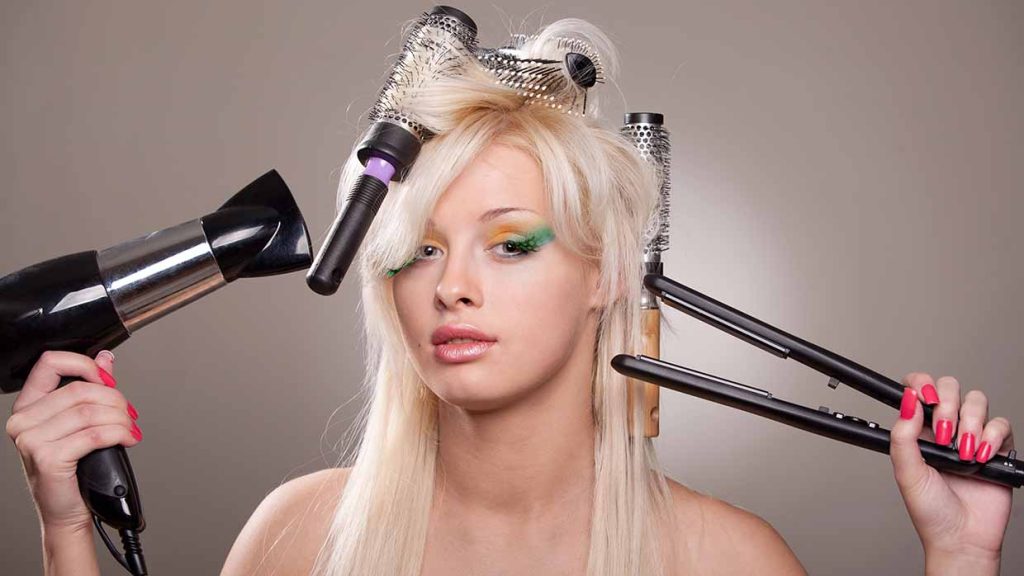
For years, the modern beauty routine followed a familiar pattern. Hair was colored, straightened, curled, extended, smoothed, highlighted, glossed, and carefully styled into submission. The goal was not simply healthy hair. It was controlled hair.
Now, a growing number of women are doing something that would have seemed almost unthinkable a decade ago: they’re stopping.
No color appointments. No keratin treatments. No extensions. No daily heat styling. No constant battle against frizz, texture, volume, or gray hairs. Instead, they are letting their hair do something many have not allowed it to do in years. They are letting it be natural.
The movement has become known informally as “rewilding” hair, a term borrowed from environmental conservation. In nature, rewilding means allowing ecosystems to return to their original state with minimal human intervention. Applied to beauty, it describes the decision to step back from intensive hair maintenance and discover what lies underneath. For many women, the results have been surprising.
The hair they thought they had wasn’t their hair
One of the most common experiences among women who begin rewilding their hair is realizing they no longer know what their natural hair actually looks like.
Someone who has colored her hair for fifteen years may not remember its original shade. A woman who has relied on straightening irons since university may have forgotten she naturally has waves. Others discover that what they believed was frizz was actually texture, or that what they considered unruly volume was simply healthy density.
Years of treatments can create a version of hair that feels familiar but is, in some ways, artificial.
When those treatments stop, the transition period can be uncomfortable. Roots grow in. Texture changes. Previous damage becomes more visible. Hair may feel unpredictable.
But after several months, many women report something unexpected: their hair begins to look more alive.
Why hair often changes after months without treatments
Hair experts point out that many common beauty treatments, while generally safe when performed correctly, still place stress on the hair fiber.
Chemical coloring alters the structure of the hair. Heat styling repeatedly exposes it to temperatures far beyond what hair encounters naturally. Extensions can place tension on the scalp and hair follicles. Frequent chemical smoothing treatments may weaken strands over time.
None of this means these treatments are inherently harmful or should be avoided. Millions of women use them successfully.
However, removing multiple sources of stress at once can allow hair to retain more moisture, improve elasticity, and experience less breakage.
The effect is not immediate. Hair grows slowly, and damaged lengths do not magically repair themselves. But as healthier hair grows in, many women begin noticing stronger strands, fewer split ends, and improved texture.
The change often becomes most visible six to twelve months into the process.
The unexpected return of texture
For decades, beauty trends have encouraged women to modify their natural texture. Straight-haired women curled their hair. Curly-haired women straightened theirs. Wavy hair was often treated as something that needed correction rather than celebration. Rewilding challenges that idea. Instead of asking how hair can be changed, women are increasingly asking what happens if they stop changing it.
Some discover loose curls they never knew they had. Others find that their hair naturally dries into shapes and patterns that require less effort than their styling routines ever demanded.
Social media has amplified the trend, with women documenting months-long journeys from chemically treated hair to natural texture. The transformation is often less dramatic than a makeover and more fascinating because of it. The goal is not perfection. The goal is authenticity.
For some women, the biggest surprise is that other people notice the difference before they do. Friends comment that their hair looks healthier. Partners say it looks softer. What begins as an experiment in reducing maintenance gradually becomes a reassessment of what “good hair” actually means.
The real benefit isn’t just saving money
Hair maintenance can be expensive, but many women who embrace rewilding say the biggest change has little to do with their bank account. It is the mental space they get back.
No more scheduling life around salon appointments. No anxiety about visible roots before a vacation. No stress when humidity ruins hours of styling. No constant pressure to maintain a version of themselves that requires endless upkeep. What begins as a practical decision often becomes a psychological one.
Women frequently describe feeling liberated by the realization that their appearance no longer depends on a tightly managed maintenance schedule. For many, that freedom becomes one of the most rewarding parts of the experience.
The emotional shift behind the trend
At its core, rewilding hair is not really about hair. It is about identity. For years, beauty culture encouraged women to view natural features as problems to solve. Gray hair needed covering. Texture needed taming. Volume needed reducing. Flyaways needed controlling.
Many women now find themselves questioning those assumptions. What if every characteristic does not require correction? What if beauty is not something achieved through constant maintenance? What if healthy hair is more attractive than perfect hair?
These questions reflect a broader shift taking place across fashion and beauty. The polished, highly curated aesthetic that dominated social media for years is gradually making room for something softer, more individual, and more authentic. People increasingly value uniqueness over uniformity. Natural texture fits that mood perfectly.
The difficult middle stage
Of course, rewilding is rarely glamorous at first. There is usually a period where old treatments remain visible while new growth emerges. Hair can feel inconsistent. Color differences become obvious. Texture patterns may clash. Many women abandon the process during this stage.
Those who continue often describe it as an exercise in patience. Hair grows approximately one centimeter per month, meaning meaningful transformation takes time. In an era obsessed with instant results, rewilding requires accepting that some changes cannot be rushed. Ironically, that may be part of its appeal.
A different definition of beauty
The women embracing rewilding are not rejecting beauty. They are redefining it. They still care about how they look. They still use products. They still experiment with style. The difference is that the starting point has changed. Instead of asking how to transform their hair into something else, they are asking how to bring out the best version of what is already there.
For some, that means embracing silver strands. For others, it means rediscovering curls, waves, volume, or a natural color they have not seen in years. The result is rarely perfect. But many say it feels more like them. And perhaps that is why so many women who stop treating their hair for a year end up making a surprising discovery: the hair they spent years trying to improve may have been beautiful all along.